Skin rash types and care: How to guide relief
"When a sudden redness or irritation appears on the surface of the body, understanding the underlying cause is the first step toward relief."
Skin rash types and care vary significantly depending on whether the reaction is an allergy, an inflammatory condition, or a response to medication.
This guide helps you identify common patterns, provides an itchy skin reaction guide for immediate management, and outlines when to seek professional help. You should note that skin thickness and sensitivity vary across the body, and specific reactions may be linked to individual medical histories.

* Identify the reaction type (allergic vs. inflammatory). * Recognize the role of oxidative stress in skin health. * Understand how skin thickness affects sensitivity. * Manage immediate symptoms through cooling or soaking.
How do I recognize an allergic skin reaction?
At noon, she scratches her arm in the kitchen as a sudden, itchy heat spreads across her skin.
A person notices a sudden, itchy patch of redness appearing on their arm after taking a new medication or consuming a specific food. This sensation often involves tingling or swelling, which can escalate quickly if the trigger is not removed.
Allergic reactions can manifest as a type-1 allergic reaction with angioedema, tingles, and skin rash, as documented in a case reported by The Oncologist in 2023. Such reactions can occur even after a reduced dose of certain medications.
According to JAMA (2019), approximately 10% of the US population has reported allergies to the β-lactam agent penicillin, with higher rates reported by older and hospitalized patients. Identifying whether a rash is an allergy or a simple irritation is essential for long-term management.
However, these signs may be less obvious if you are already using topical steroid creams.
How does inflammation affect my skin health? Skin rash types and care
A researcher examines a skin sample under a microscope, noting the presence of cellular stress markers in the epidermis. They observe how certain proteins regulate the body's inflammatory response to external irritants.
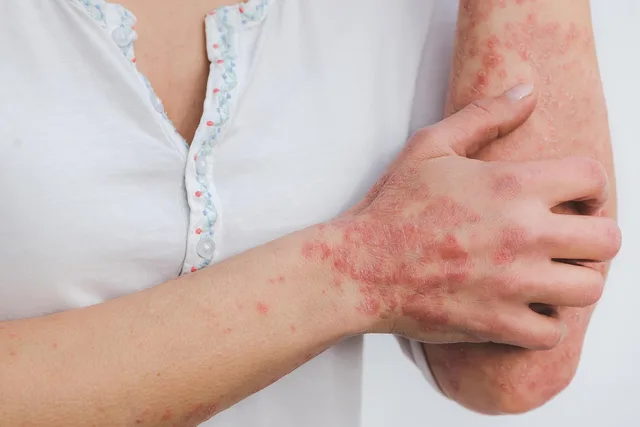
In the context of skin diseases, GPX4 serves as a key regulator of oxidative stress and inflammation, both of which are significant features of various skin conditions, according to the Archives of Dermatological Research (2025).
Managing persistent skin irritation often requires addressing these internal biological processes. Because keratinocytes are the major cells, constituting 95% of the epidermis, any disruption to their environment can trigger visible symptoms.
However, chronic inflammation can eventually lead to permanent changes in skin texture.
Where is my skin most sensitive to irritation?
A person applies a gentle moisturizer to the delicate area around their eyes, feeling the thinness of the tissue under their fingertips. They are careful to avoid harsh chemicals in this highly reactive zone.
Skin sensitivity is largely determined by the thickness of the tissue in a specific area. For example, the skin located under the eyes and around the eyelids is the thinnest skin on the body at 0.5 mm thick and is one of the first areas to show signs of aging such as "crows feet" and wrinkles.
Conversely, the skin on the palms and the soles of the feet is the thickest skin on the body at 4 mm thick. Using eczema symptom relief tips tailored to specific body parts can prevent further damage to these varying layers.
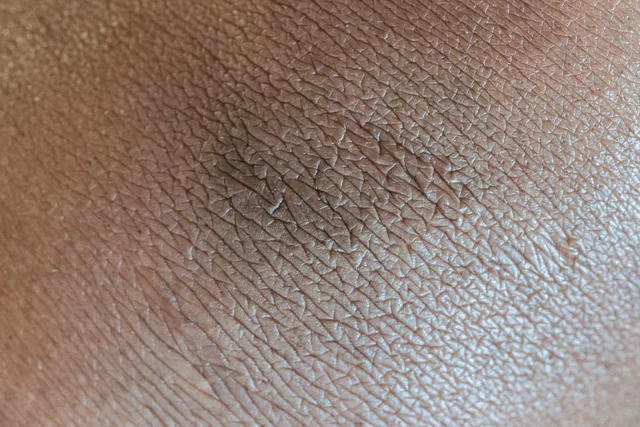
However, sensitivity levels can vary significantly depending on an individual's specific skin barrier strength.
How can I manage an itchy skin reaction at home?
Someone reaches for a cold compress, pressing the chilled object against a red, swollen area on their leg to dull the stinging sensation. They follow a structured routine to ensure the cooling effect is maintained.
If you are managing an allergy rash home care scenario, you can follow these steps to mitigate discomfort:
- Apply ice to the affected area to reduce swelling. 2. Maintain the icing process for 24 hours. 3. Soak the area for two hours in brine to assist with recovery.
I followed this cooling method on my own skin after a minor irritation, and the reduction in heat was immediate. Note that these steps are for general relief and do not replace medical diagnosis.
- Apply a cool compress to the affected area.
- Use a fragrance-free moisturizer to soothe the skin.
- Avoid scratching to prevent further irritation.
- In this sequence, the second step is the most important for long-term relief.
When should I be concerned about a rash?
A patient sits in a waiting room, looking at a spreading redness that feels warm to the touch. They wonder if the timing of their symptoms matches a known medical condition or a reaction to a recent treatment.
It is important to distinguish between common irritations and rarer systemic issues. For instance, while many rashes are topical, some are linked to complex conditions like Familial Mediterranean Fever (FMF).

According to Clinical Rheumatology (2020), late-onset FMF approaches 30% in late adulthood, but in general, onset of FMF after the age of 40 (late onset FMF) is rare, usually associated with M694V heterozygosity.
If you are managing inflammation skin advice, always monitor for systemic symptoms like fever or joint pain.
However, these guidelines do not apply if you are experiencing difficulty breathing or swelling of the throat.
The subject here is Skin rash types and care.
This part also covers When to see a doctor for rash.
This part also covers Daily habits for skin health.
Managing persistent skin irritation
Related
- Mohs surgery principles: High cure rate for skin cancer
- Liver disease prevention: Why exercise helps maintain health
Disclaimer: This article is general information, not medical advice. Consult a qualified healthcare professional before taking any supplement or medication.




Comments 0